As WRFR LPFM heads into its sixth year of operations, the station management, moribund for a quarter decade, has now moved into the hands of Cathy McGuinness. (CM) CM has a bit of experience at a west coast station; she hosted a show at WRFR for 6 months before being tapped for the station manager job, (to the dismay of some who felt there were more qualified. candidates) But so it goes...
Over the past month, CM has been busy reorganizing the station's operations and administration.
Major Change 1. Meetings. Formerly a democracy of volunteers debating and voting on policy and decisions, with the station manager executing those decisions, WRFR now has a more imperial management style. One whereby the station manager makes decisions unilaterally, with the volunteers relegated to committees , whose heads are to confirm or not CM's decisions.
Further, CM has dropped the historic use of standard meeting protocol (old business, new business, motions & votes) , adopting instead a 'briefing' style of governance, in which she presents her newest plans and decisions to the assembled, whose responses must wait until she's done. While questions may be replied to, there is no binding vote the volunteers can make on the new policies. The clumsiness of this approach is borne out by...
Major Change 2. The haphazard way that new DJs or spoken work programmers get approved to go on air.
Historically, a DJ wannabe showed up at the regular Saturday volunteers meeting, did a dog and pony show, filled out a membership form, asked to read the list of Do's and Don'ts. The new programmer would be asked to sit in on someone else's show once or twice to learn the basic procedures first hand. After which, the new DJ selects his or her first one hour slot and begins doing a show, typically with a veteran programmer at hand in case of confusion. That's it.
Now?
A programming committee has been set up. At its first meeting (which I didn't attend after CM assured me was only to discuss committee organizational matters) at least one new show was approved and another, a fait accompli grab of four hours by country DJ Larry Beckwith was recognized. More about him later.
But the response when proposals are submitted for two prominent local entertainers (comic Humble Farmer, and Blues guitarist/producer Blind Albert, is a waspish statement that the programming committee "is still trying to get it's self together and figure out which end is up."
Mindful of Gulliver's Big Endians and the Little Endians: the struggle between Lilliputians who preferred cracking open their soft-boiled eggs from the little end, and Blefuscans who preferred the big end; I'm not too sanguine that any end will be up any time soon.
But not to worry. A cheery note from the ProgComm: "Just hang tight, ok?"
Hanging on in Rockland.
Ron
Oh yes, Larry...... This gentleman is now up to twenty two hours on air; the average DJ on WRFR has 2 hours. The fact of this grotesque disparity is simply unmentionable to polite people, so I'll explain to all ye unwashed:
Mr. B, it is said, is a special case. How special? He simply takes any hours he wants. He threatens to drop all his shows if any of his hours including the newly acquired ones are trimmed back. He has physically assaulted several programmers, and thoroughly bullied the last two station managers; he has a criminal record of handgun violence; staff are warned not to upset him, lest....?!?
Ah, but this is counterbalanced in the minds of three successive station managers by the fact that he is over 70 years old and "has nothing else to do". Pretty flimsy rationale, but in the modern world, backing up threats with violence usually gets you your way. Snowy bearded and avuncular-as-Santa-Claus though he may be, Beckwith's use of fear and loathing as a programming tool, is probably without parallel in the known radio universe.
Showing posts with label low power fm. Show all posts
Showing posts with label low power fm. Show all posts
Thursday, September 6, 2007


Friday, August 10, 2007
New England's 1st low power FM radio station focus of federal media rights lawsuit
WRFR -lpFM is the oldest licensed Low Power FM radio station in the United States. The station's 100 watt transmitter in Rockland, Maine and its 250 watt repeater in neighboring Rockport provide a shifting blend of local and global talk, news and music, in a broad spectrum from country to classical, to a listening area of about 20,000, in coastal Knox County on the western shore of Penobscot Bay , including the city of Rockland and the towns of Camden, Rockport, Owls Head and Thomaston.
The station's news coverage focuses on Penobscot Bay fishery and enviromental issues, and oversight of the Maine state prison in nearby Warren.
It is the latter, WRFR's coverage of state prison administration issues, from the vantage point of inmate correspondent Deane Rowland Brown, assisted by WRFR news producer Ron Huber, that has led to the filing of a federal civil rights/media rights court case, Brown vs Magnusson et al. Depending on the resolution of this case, America's media may find itself liberated from arbitrary restraints by government officials on news collecting , or if things go badly wrong, may find itself even further out of the loop.
Either way, this civil action may well go into the history books as a landmark decision on the rights of the media and of Incarcerated America, that huge, ever-growing demographic group.
The case should be argued in US District Court in Portland later this year or sometime next year.
At issue: Can the Maine Dept of Corrections forbid inmates from being radio correspondents, and even from submitting written correspondence to a website or radio station for airing, without facing punishment such as loss of phone privileges, solitary confinement, and even exile to a distant state? Does this violate the US Constitution?
To illuminate WRFR's role in the case , below are the sentences in the case filing that mention WRFR LPFM. including Ron Huber, Brown's producer at the radio station. Each is accompanied by a link to a relevant document or website. Numbers are paragraph numerations in the lawsuit text.
Paragraph 47. On January 12, 2006, the name of Ron Huber was added to Mr. Brown's Prisoner Telephone System Number Request. Mr. Huber hosts a radio show on WRFR-LP, a lowpower community radio station in Rockland, Maine. From this time until late October
2006, Mr. Brown communicated with Mr. Huber, by mail and telephone, discussing
various topics that reflected very unfavorably upon the prison.
[Listen to some of Deane Brown's Reports on WRFR
http://www.penbay.org/wrfr/prisonproject/dbreports.html ]
Paragraph 48. ....On March 2, 2006, Mr. Brown wrote to Deputy Warden Riley, thanking him for helping with the lost property.....Deputy Warden Riley asked Prison Industries to restore Mr. Brown's job. Bob Waldron, of Prisoner Industries agreed to do so. However, Captain David Cutler, and Deputy Warden O'Farrell objected and the job was not restored. On June 12, 2006, Mr. Brown detailed these facts in a letter to Commissioner Magnusson, but never received a response. He subsequently detailed these facts, as well as more details about his May 2005 placement in High Risk status, in a letter to Governor John Baldacci, dated July 21, 2006. Mr. Brown did receive a response from the Governor's office, which he forwarded to WRFR reporter Ron Huber.
Paragraph 50. In early October, Mr. Brown was given a copy of an exit interview report about a guard who was leaving employment at the Maine State Prison. This document was given to Mr. Brown in his capacity as an inmate correspondent for the Portland Phoenix and for
WRFR radio. Mr. Brown shared the document with reporters Lance Tapley of the
Phoenix, and Ron Huber of WRFR, who placed it on his website, "Penobscot Bay
Watch," and discussed the contents on air. The document discusses, inter alia, issues of
corruption in the system, low morale, the serving of food that was more than a year old,
incompetence, and forced over-time..
[ Read exit Interview: http://www.penbay.org/wrfr/prisonproject/exitinterview.html ]
-----------------------------------
Paragraph 53. On October 16, 2006, a Prisoner Telephone System Number Request was
completed (signature unreadable), ordering that Mr. Brown's phone calls to Lance
Tapley, reporter for the Portland Phoenix, and Ron Huber, reporter for WRFR, be
monitored.
Paragraph 54. On October 17, 2006, Mr. Brown received a letter from Warden Merrill, stating that it had been brought to his attention that he Mr. Brown was "disclosing confidential
information through the media and in particular through the website, "Penobscot Bay
Watch." Merrill then informed Mr. Brown that he had ordered the telephone numbers
that Mr. Brown had been using to contact the website and WRFR radio to be deleted
from his list of authorized telephone numbers. He further stated that he was "warning
[Brown] that [he] may not disclose confidential information through any other means,
such as writing letters. If [he does] not heed this warning, further appropriate action will
be taken, up to and including disciplinary action."
[Read Merrill's letter:
http://www.penbay.org/wrfr/prisonproject/mspwardenltr101706.html ]
Paragraph 56. On October 18, 2006, Mr. Brown wrote a letter to Merrill in which he noted that "no information has been provided to me in confidence." Brown further stated that "I am
a correspondent with WRFR. WRFR, the Portland Phoenix and myself enjoy the
freedom of the press," and he stated that Merrill "should not be surprised to find this
letter on the Penobscot Bay Watch website, reprinted (with permission) in any of many
publications, and, especially read live over the air at WRFR."
[Read Brown's letter:
http://www.penbay.org/wrfr/prisonproject/dbrownltr_oct1806.html ]
------------------------------
Paragraph 58. On October 24, 2006, Ron Huber, of WRFR radio, wrote a letter to Warden
Merrill concerning Merrill's decision to prohibit Mr. Brown from continuing as a
correspondent for WRFR. Huber stated that "while correctional facilities may restrict a
prisoner's right to freedom of speech for cause, constitutional rights cannot be summarily
denied." Huber also reiterates the contention that the confidential information that
Merrill accused Mr. Brown of disclosing was "information supplied by the person who
generated the information," and noted that if that person chose to release it, it is no longer
confidential, noting that "[i]t appears that the new restriction on Mr. Brown is retaliation
for the legitimate news he has reported on WRFR."
[Read the WRFR letter at http://www.penbay.org/wrfr/prisonproject/wrfrletter_102406.html
Paragraph 59. In a letter dated October 26, 2006, Merrill responded to Mr. Huber's October 24, 2006 letter. In his letter, Merrill stated that "The first Amendment does not give a
prisoner the right to act as a news correspondent. Departmental policy also provides that
a prisoner may not act as a reporter, publish under a byline or act as an agent of the news
media." Warden Merrill ends by stating that his "decision stands as previously stated."
Read Merrill's letter:
http://www.penbay.org/wrfr/prisonproject/mspwardenltr102606.jpg
[NOTE. The federal lawsuit asks the judge to find the Maine Department of Corrections and its officials violated the US and State Constitution. Specifically it charges the below:
Paragraph 72. Mr. Brown, a jailhouse correspondent, was ordered to cease his communication with the media, an order made without any justifiable cause. Furthermore, he was informed that under Departmental policy, "[a] prisoner may not act as a reporter, publish
under a byline or act as an agent of the news media," in violation of the First and
Fourteenth Amendments and 42 U.S.C. § 1983.
Paragraph 73. Defendants knowingly and intentionally engaged in a deliberate abuse of the
power granted to them by the state by retaliating against Mr. Brown because of his
contact with the press at which time he disclosed the nature of human rights abuses that
were occurring in the Maine State Prison, and because of his numerous grievances related
to prison conditions, by repeatedly labeling him as a security risk with no evidence to
support the charge, and disciplining him through placement in Administrative
Segregation, in violation of Plaintiff's clearly established constitutional rights under the
First, Eighth and Fourteenth Amendments and 42 U.S.C. § 1983.
Paragraph 74. Defendants knowingly and intentionally targeted Plaintiff for a speedy transfer to a "distant location" because of his exercise of his right to communicate with the press to
speak out on abuses within the prison, and his right to file grievances regarding prison
conditions, in violation of Plaintiff's clearly established constitutional rights under the
First, Eighth and Fourteenth Amendments of the United States Constitution and 42
U.S.C. § 1983
Paragraph 77. Plaintiff was unjustifiably transferred to a distant prison without any notice or
knowledge of the reasons for the transfer and without any opportunity to appear before an
administrative body, in retaliation for his communications with the media, in violation of
the Fourteenth Amendment and 42 U.S.C. § 1983.
End of extracts from the lawsuit.
What's next? Watch for Amicus curiae Briefs. Want more info contact Ron Huber
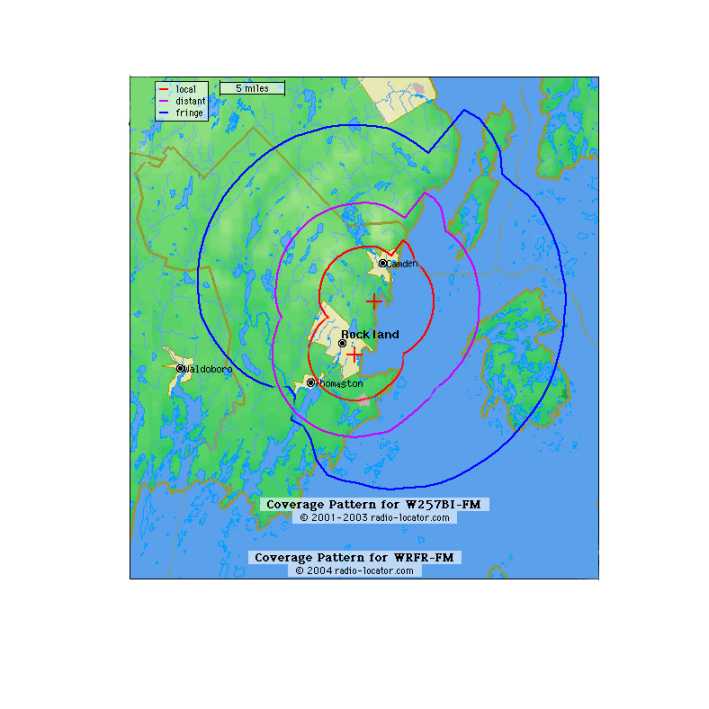

The station's news coverage focuses on Penobscot Bay fishery and enviromental issues, and oversight of the Maine state prison in nearby Warren.
It is the latter, WRFR's coverage of state prison administration issues, from the vantage point of inmate correspondent Deane Rowland Brown, assisted by WRFR news producer Ron Huber, that has led to the filing of a federal civil rights/media rights court case, Brown vs Magnusson et al. Depending on the resolution of this case, America's media may find itself liberated from arbitrary restraints by government officials on news collecting , or if things go badly wrong, may find itself even further out of the loop.
Either way, this civil action may well go into the history books as a landmark decision on the rights of the media and of Incarcerated America, that huge, ever-growing demographic group.
The case should be argued in US District Court in Portland later this year or sometime next year.
At issue: Can the Maine Dept of Corrections forbid inmates from being radio correspondents, and even from submitting written correspondence to a website or radio station for airing, without facing punishment such as loss of phone privileges, solitary confinement, and even exile to a distant state? Does this violate the US Constitution?
To illuminate WRFR's role in the case , below are the sentences in the case filing that mention WRFR LPFM. including Ron Huber, Brown's producer at the radio station. Each is accompanied by a link to a relevant document or website. Numbers are paragraph numerations in the lawsuit text.
Paragraph 47. On January 12, 2006, the name of Ron Huber was added to Mr. Brown's Prisoner Telephone System Number Request. Mr. Huber hosts a radio show on WRFR-LP, a lowpower community radio station in Rockland, Maine. From this time until late October
2006, Mr. Brown communicated with Mr. Huber, by mail and telephone, discussing
various topics that reflected very unfavorably upon the prison.
[Listen to some of Deane Brown's Reports on WRFR
http://www.penbay.org/wrfr
Paragraph 48. ....On March 2, 2006, Mr. Brown wrote to Deputy Warden Riley, thanking him for helping with the lost property.....Deputy Warden Riley asked Prison Industries to restore Mr. Brown's job. Bob Waldron, of Prisoner Industries agreed to do so. However, Captain David Cutler, and Deputy Warden O'Farrell objected and the job was not restored. On June 12, 2006, Mr. Brown detailed these facts in a letter to Commissioner Magnusson, but never received a response. He subsequently detailed these facts, as well as more details about his May 2005 placement in High Risk status, in a letter to Governor John Baldacci, dated July 21, 2006. Mr. Brown did receive a response from the Governor's office, which he forwarded to WRFR reporter Ron Huber.
Paragraph 50. In early October, Mr. Brown was given a copy of an exit interview report about a guard who was leaving employment at the Maine State Prison. This document was given to Mr. Brown in his capacity as an inmate correspondent for the Portland Phoenix and for
WRFR radio. Mr. Brown shared the document with reporters Lance Tapley of the
Phoenix, and Ron Huber of WRFR, who placed it on his website, "Penobscot Bay
Watch," and discussed the contents on air. The document discusses, inter alia, issues of
corruption in the system, low morale, the serving of food that was more than a year old,
incompetence, and forced over-time..
[ Read exit Interview: http://www.penbay.org/wrfr
------------------------------
Paragraph 53. On October 16, 2006, a Prisoner Telephone System Number Request was
completed (signature unreadable), ordering that Mr. Brown's phone calls to Lance
Tapley, reporter for the Portland Phoenix, and Ron Huber, reporter for WRFR, be
monitored.
Paragraph 54. On October 17, 2006, Mr. Brown received a letter from Warden Merrill, stating that it had been brought to his attention that he Mr. Brown was "disclosing confidential
information through the media and in particular through the website, "Penobscot Bay
Watch." Merrill then informed Mr. Brown that he had ordered the telephone numbers
that Mr. Brown had been using to contact the website and WRFR radio to be deleted
from his list of authorized telephone numbers. He further stated that he was "warning
[Brown] that [he] may not disclose confidential information through any other means,
such as writing letters. If [he does] not heed this warning, further appropriate action will
be taken, up to and including disciplinary action."
[Read Merrill's letter:
http://www.penbay.org/wrfr
Paragraph 56. On October 18, 2006, Mr. Brown wrote a letter to Merrill in which he noted that "no information has been provided to me in confidence." Brown further stated that "I am
a correspondent with WRFR. WRFR, the Portland Phoenix and myself enjoy the
freedom of the press," and he stated that Merrill "should not be surprised to find this
letter on the Penobscot Bay Watch website, reprinted (with permission) in any of many
publications, and, especially read live over the air at WRFR."
[Read Brown's letter:
http://www.penbay.org/wrfr
------------------------------
Paragraph 58. On October 24, 2006, Ron Huber, of WRFR radio, wrote a letter to Warden
Merrill concerning Merrill's decision to prohibit Mr. Brown from continuing as a
correspondent for WRFR. Huber stated that "while correctional facilities may restrict a
prisoner's right to freedom of speech for cause, constitutional rights cannot be summarily
denied." Huber also reiterates the contention that the confidential information that
Merrill accused Mr. Brown of disclosing was "information supplied by the person who
generated the information," and noted that if that person chose to release it, it is no longer
confidential, noting that "[i]t appears that the new restriction on Mr. Brown is retaliation
for the legitimate news he has reported on WRFR."
[Read the WRFR letter at http://www.penbay.org/wrfr
Paragraph 59. In a letter dated October 26, 2006, Merrill responded to Mr. Huber's October 24, 2006 letter. In his letter, Merrill stated that "The first Amendment does not give a
prisoner the right to act as a news correspondent. Departmental policy also provides that
a prisoner may not act as a reporter, publish under a byline or act as an agent of the news
media." Warden Merrill ends by stating that his "decision stands as previously stated."
Read Merrill's letter:
http://www.penbay.org/wrfr
[NOTE. The federal lawsuit asks the judge to find the Maine Department of Corrections and its officials violated the US and State Constitution. Specifically it charges the below:
Paragraph 72. Mr. Brown, a jailhouse correspondent, was ordered to cease his communication with the media, an order made without any justifiable cause. Furthermore, he was informed that under Departmental policy, "[a] prisoner may not act as a reporter, publish
under a byline or act as an agent of the news media," in violation of the First and
Fourteenth Amendments and 42 U.S.C. § 1983.
Paragraph 73. Defendants knowingly and intentionally engaged in a deliberate abuse of the
power granted to them by the state by retaliating against Mr. Brown because of his
contact with the press at which time he disclosed the nature of human rights abuses that
were occurring in the Maine State Prison, and because of his numerous grievances related
to prison conditions, by repeatedly labeling him as a security risk with no evidence to
support the charge, and disciplining him through placement in Administrative
Segregation, in violation of Plaintiff's clearly established constitutional rights under the
First, Eighth and Fourteenth Amendments and 42 U.S.C. § 1983.
Paragraph 74. Defendants knowingly and intentionally targeted Plaintiff for a speedy transfer to a "distant location" because of his exercise of his right to communicate with the press to
speak out on abuses within the prison, and his right to file grievances regarding prison
conditions, in violation of Plaintiff's clearly established constitutional rights under the
First, Eighth and Fourteenth Amendments of the United States Constitution and 42
U.S.C. § 1983
Paragraph 77. Plaintiff was unjustifiably transferred to a distant prison without any notice or
knowledge of the reasons for the transfer and without any opportunity to appear before an
administrative body, in retaliation for his communications with the media, in violation of
the Fourteenth Amendment and 42 U.S.C. § 1983.
End of extracts from the lawsuit.
What's next? Watch for Amicus curiae Briefs. Want more info contact Ron Huber
Subscribe to:
Posts (Atom)